
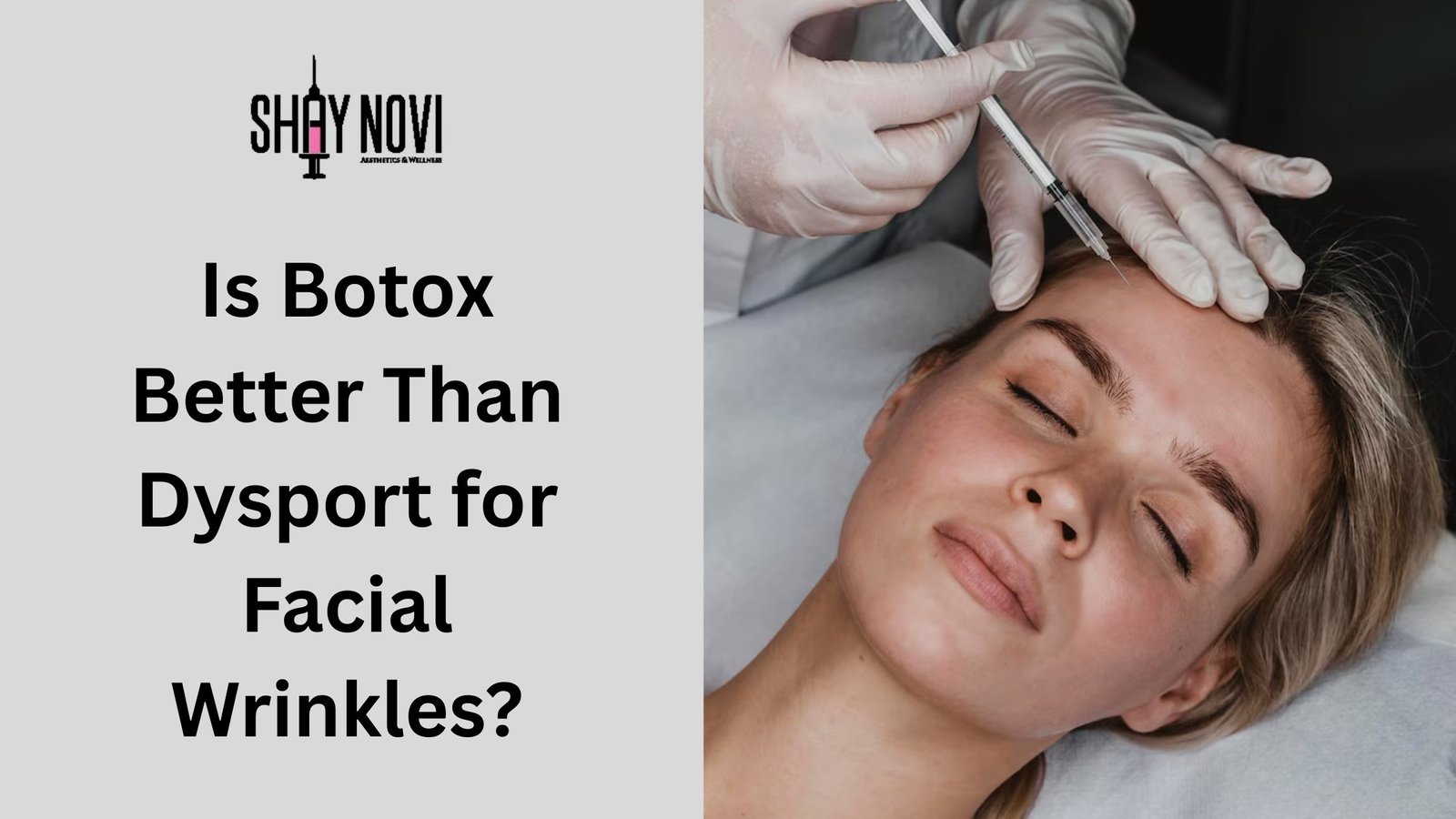
Is Botox Better Than Dysport for Facial Wrinkles?
Non-surgical anti-aging treatments have become increasingly popular among individuals seeking youthful, refreshed skin without downtime. Among injectable wrinkle treatments, Botox and Dysport are two of the most commonly compared options. Many people wonder is Botox better than Dysport, and which treatment delivers the best results. This article explores their differences, benefits, and how to choose the right option for your aesthetic goals.
What Are Neuromodulators?
Neuromodulators are injectable treatments that use botulinum toxin to relax targeted facial muscles. By temporarily reducing muscle activity, these injections smooth dynamic wrinkles caused by repeated facial expressions. Neuromodulators are widely used in aesthetic procedures and medical applications, including migraine treatment, excessive sweating, and muscle spasms.
Botox Explained
Botox is a well-known neuromodulator derived from botulinum toxin type A and approved by the FDA for aesthetic and medical use. It is widely used to treat forehead lines, crow's feet, and frown lines. Botox works by blocking nerve signals to muscles, preventing muscle contraction and the formation of wrinkles.
Dysport Explained
Dysport is another FDA-approved neuromodulator that also contains botulinum toxin type A. It is used for similar aesthetic purposes, including smoothing wrinkles and fine lines. Dysport differs slightly in formulation, which affects how it spreads and how quickly results appear.
How Botox and Dysport Reduce Wrinkles?
Botox and Dysport reduce wrinkles by temporarily relaxing the facial muscles that cause expression lines. These dynamic wrinkles develop from repeated movements such as smiling, frowning, or raising the eyebrows. When injected, both treatments block nerve signals that trigger muscle contractions. This relaxation allows the skin above the muscle to smooth out, reducing the appearance of fine lines and deeper wrinkles. The result is a more youthful, refreshed, and rested look. Since the effects are not permanent, the muscles gradually regain movement over time, usually within three to four months, requiring maintenance treatments.
Similarities Between Botox and Dysport
Botox and Dysport are both neuromodulators made from botulinum toxin type A and are FDA-approved for aesthetic and medical use. They have similar safety profiles when administered by trained professionals and are widely used to treat wrinkles and fine lines. Both treatments aim to create natural-looking results by relaxing overactive facial muscles without altering facial structure. Another similarity is minimal downtime, allowing patients to resume normal activities shortly after treatment. Additionally, both injectables can be used preventively to delay the formation of deeper wrinkles and signs of aging.
Key Differences: Botox vs Dysport
Although Botox and Dysport share the same active ingredient, they differ in formulation, diffusion, and dosing. Dysport has a smaller molecular structure, which permits it to spread more easily across larger treatment areas. This makes it suitable for broader areas, such as the forehead. Botox, on the other hand, is more concentrated and offers precise control, making it ideal for targeted areas such as crow's feet or frown lines. The dosing units differ between the two, so patients may need more Dysport units than Botox to achieve similar results. These differences help providers customize treatment plans.
Botox vs Dysport for Different Wrinkle Concerns
Botox is often preferred for fine lines and small, localized wrinkle areas because it provides precise muscle control. It is commonly used for subtle enhancements and detailed facial corrections. Dysport may be better suited for moderate-to-deep expression lines or larger facial zones, given its wider diffusion. Both treatments are effective for preventive anti-aging, especially for younger patients who want to slow the development of wrinkles. The choice between Botox and Dysport depends on wrinkle severity, treatment area size, and individual facial muscle strength, making professional consultation essential for optimal results.
Treatment Areas and Results
Botox and Dysport are naturally used to treat several facial areas where wrinkles form from repeated expressions. These include forehead lines caused by eyebrow movement, crow's feet around the eyes from smiling or squinting, and glabellar lines between the eyebrows from frowning. Off-label uses include the chin, jawline, neck bands, and even the nose. Results vary depending on individual anatomy, muscle strength, injection technique, and dosage. Some patients may require additional units or touch-up sessions to achieve balanced and natural-looking results.
Results Timeline and Longevity
Botox generally begins to show visible results within three to seven days, with full effects appearing within two weeks. Dysport may act slightly faster, often showing improvements within two to five days due to its diffusion properties. Both treatments usually last three to four months, although some individuals may experience longer-lasting results depending on metabolism, lifestyle, and muscle activity. Regular maintenance treatments are recommended to sustain wrinkle reduction and prevent lines from becoming deeper. Repeated treatments may help train facial muscles to contract less, prolonging the effects.
Is Botox Better Than Dysport for Facial Wrinkles?
Many people ask, "Is Botox better than Dysport for facial wrinkles?" The answer depends on individual goals, facial anatomy, and treatment areas. Botox may be better for precise, targeted wrinkle correction, while Dysport may be more suitable for larger areas or a faster onset of results. Both treatments are effective, safe, and widely used in aesthetic medicine. A personalized talk with a qualified injector is essential to determine the best option. An experienced provider can assess muscle strength, skin condition, and desired outcomes to create a custom treatment plan for natural and long-lasting results.
Conclusion
Botox and Dysport are both highly effective injectable treatments for reducing facial wrinkles. Understanding their distinctions can help you make an informed decision. Ultimately, the best option depends on your skin concerns, treatment goals, and professional guidance. Consulting an experienced aesthetic provider ensures personalized treatment and optimal results.
Frequently Asked Questions (FAQs)
Is Botox better than Dysport for wrinkles?
Both are effective; the best option depends on treatment goals and facial anatomy.
Which looks more natural?
Both can produce natural-looking results when administered properly.
Which works faster?
Dysport may show results slightly faster, but both are effective.
Which lasts longer?
Both typically last three to four months.
Is one better for beginners?
Both are suitable for first-time patients depending on individual needs.








0 Comments